-
How Willy might find a way to Russell
up a new play
- Jan 15 2008
- by Joe Riley, Liverpool
Echo
- The 2008 summons came too
late for Willy Russell. By the time somebody did ask me
to become significantly involved the week before Christmas
it was too late. I cant write a play to go on this
year. Not now.
-
- But when there was time
for me to do it, I was perfectly open to ideas . . .
-
- Besides, I have treated
Liverpool as Capital of Culture for 30 years, and nothings
changed there.
- Hearing that variable message
from Liverpools most feted writer is key to lots of people
being mystified why the citys two main producing theatres,
the Everyman and Playhouse as well as the
-
- Capital of Culture tsars
have missed the boat in nabbing his services.
- But all is far from lost.
-
- The independently-run Royal
Court, with its plans of establishing a permanent company akin
to the old days of repertory, has succeeded in landing the big
catch without a penny of support from town hall, Arts
Council or Culture Company coffers.
-
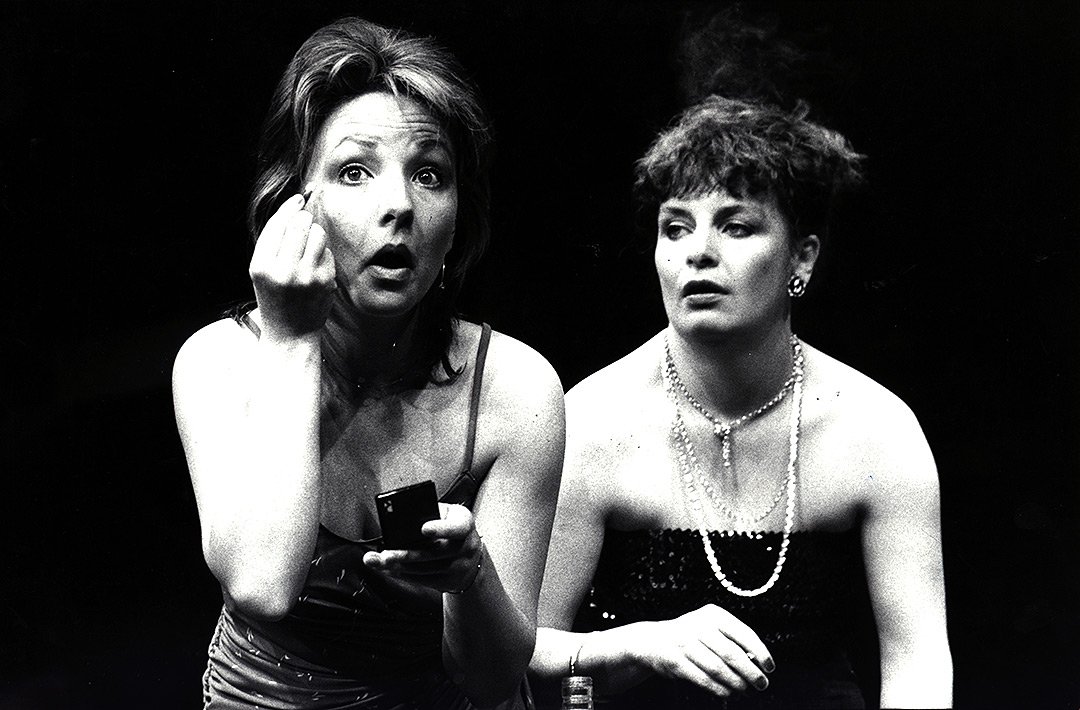
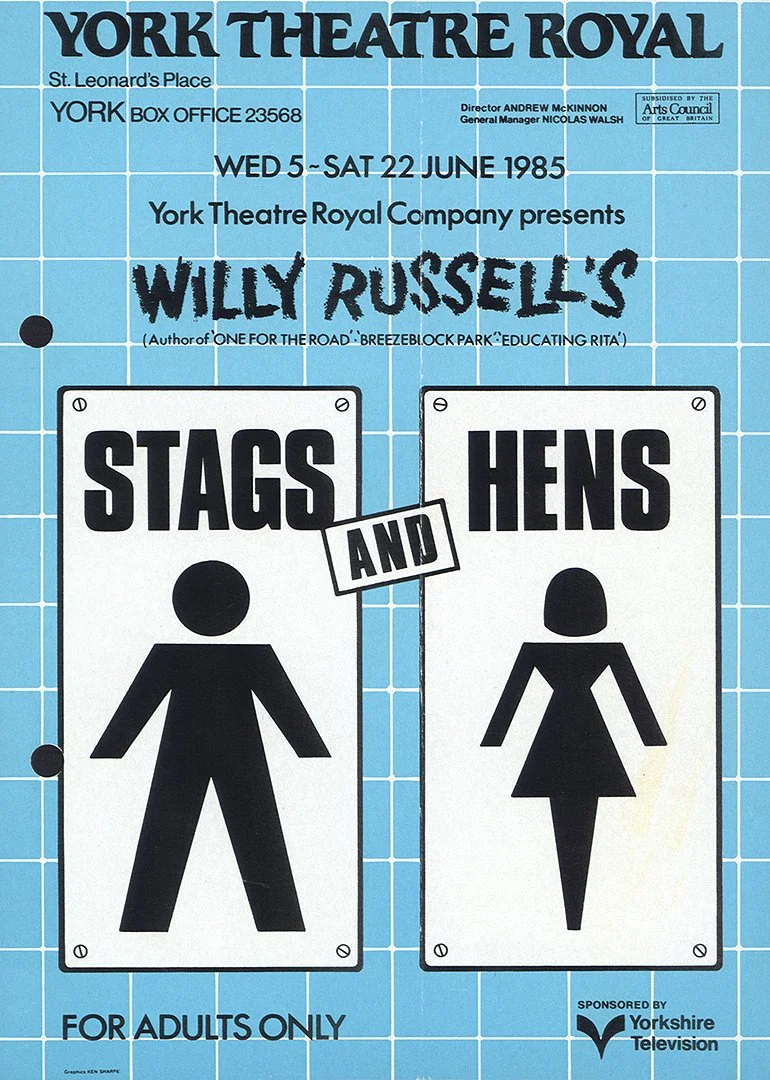
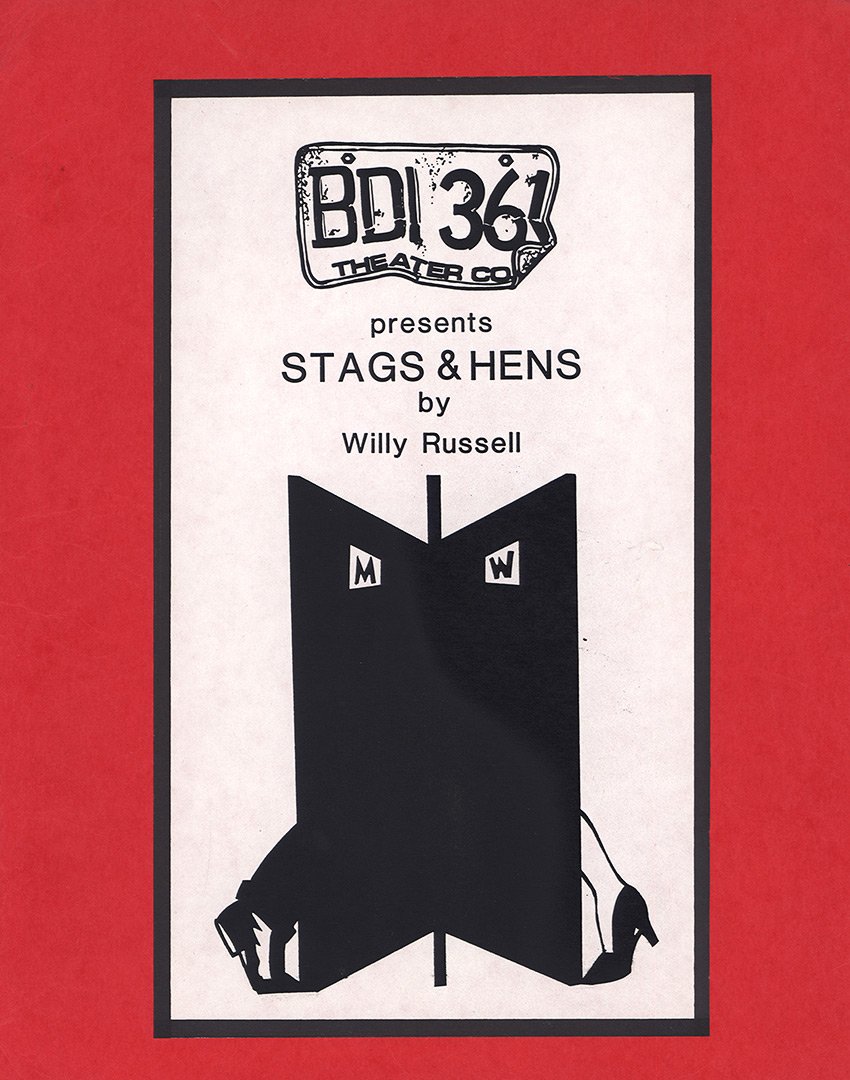
- Willy Russell, to use his
own term, is remixing Stags and Hens, one of his
classic comedies of yesteryear, about the resulting chaos when
bride and groom hold their prenuptial parties at the same venue.
-
- I had already done a
major overhaul before it got into rehearsal, says Willy.
- Revisiting a play is
not nearly as difficult as starting from scratch. All the important
creative work was done for the original.
-
- I had also re-engaged
along the way, when it became the movie Dancin Thru The
Dark.
- For the new stage production,
Willy has been directly involved in casting and rehearsals, literally
re-writing material on the hoof.
-
- Now its much tighter.
Partly because we live in the film world, and we dont watch
things in the same way as we did in 1978.
-
- Stuff that played perfectly
fine then, now seems so drawn out. People have a lower boredom
threshold. Increasingly, we are into the age of the 90-minute
stage play.
-
- Also, a play set in
the ladies and gents of a ballroom once seemed so daring. It
was a look into a world people didnt see in the theatre.
-
- So it motors along far
faster. The language is also far more of today the colloquial
phrases and the use of so-called obscenities.
-
- But its still
the same play.
-
- For all the trappings of success
from material performed world-wide (he has just returned from
seeing a production of Educating Rita in Paris), Willy still
goes to work each day: a luxurious and meticulously tidy two-storey
loft apartment in the Georgian quarter behind Liverpool Cathedral
houses a grand piano: I used it to write some extra songs
for a planned film of Blood Brothers.
-
- Its not happening
at the moment because nobody will give us the 50 or 60 million
dollars needed.
- Ive finished the
screenplay. Most of that was written in (the movie director)
Alan Parkers Soho office. But I did the music here.
-
- Willy has never quit Liverpool:
It suits me, he says.
-
- The thing some value
about me more than my work is that I have stayed. I sometimes
think that if Osama bin Laden had come from Anfield, as long
as hed stayed, everyone would be grateful.
- He does some teaching and
always has since his mate, the late Adrian Henri, persuaded him
to helm writers courses back in the 70s.
-
- He reads some of the many
scripts sent to him: A lot of the time they dont
get through. But at the moment Ive got a novel from an
actor Ive known for years. Now Im not going to say
no to that, am I?
-
- Willy doesnt mind the
attention when he goes around town: Most of the time its
fine if people come up and exchange a word.
-
- If youre buying
undies and socks then its different, which is why I get
those in London.
- One more recent project was
a performance tour with Calendar Girls writer and musician Tim
Firth, during which Willy sang and read from his debut novel
The Wrong Boy: The costs were ginormous. If we had been
25 year-olds it would have been a fantastic beginning.
-
- I have never stopped
working and never will. The emphasis may have changed. I have
not written a new stage play for a long time.
-
- But will things go full circle?
-
- The reason I am re-doing
Stags and Hens, without seeming to announce a manifesto, is because
there is an attempt to put together a permanent acting company.
-
- If that happened, it
would mean for the first time in 20 years I would have a theatrical
home for which I may, or may not, write a new play.
-
- But thats the
sort of situation I could work with.
-
- I havent enjoyed
those conditions basically since regional theatre changed beyond
all recognition and became administrational rather than creative.
-
- But its very early
days.
-
- I have always required
certain conditions to write a play, I have never written specifically
for the West End or Broadway. I write plays for groups of people.
- And I still say that
when it works, there is nothing better than a full-on theatre
experience.
Courting favour with Willy
Russell
Philip Key
Daily Post
...finds Willy Russell enthusiastic
and frustrated in equal measure
YOU might think that Willy
Russells life is a problem-free one. He is, after all,
one of Britains most successful playwrights, with plays
produced worldwide and his musical, Blood Brothers, currently
packing them in at the Liverpool Empire. Alas, like anyone else,
Mr Russell does have problems.
There is the year he spent
writing a screenplay that no-one wants to produce, his film Dancin
Thru the Dark that remains elusively unavailable on DVD, a loss-making
music tour and a couple of medical problems involving regular
check-ups.
But Russell at 60 remains decidedly
upbeat, a mood enhanced by the forthcoming revival of his comedy,
Stags and Hens, at Liverpools Royal Court Theatre. Hes
suddenly very enthusiastic about both play and venue. It was
not always so, he admits.
It all began when former Liverpool
Everyman director Bob Eaton came to town to direct the comedy,
Brick Up the Mersey Tunnels, at the Royal Court.
They are old pals and met up
for supper where Eaton suggested he do something for the Court,
now being run by Kevin Fearon, who had also worked at the Everyman.
In fact, Russell had never
met Fearon he was an unknown quantity to me
and was not convinced about the venue. To be honest,
I was quite sceptical because the last time I was at the theatre
it was in a terrible state and I had heard they did not have
proper theatre seating in the stalls. I was just wary about the
whole thing.
But he met Fearon and was impressed
with his vision of creating a regular company at the theatre.
It would be made up of all those top-notch actors we have
known and seen for years, and he wanted the kind of theatre that
had broad appeal but nevertheless spoke on a serious level as
well as a comic one
In some respects, my
work falls naturally into that world more than other theatrical
worlds that exist in Liverpool at the moment.
So he went to see a show at
the theatre, the Liverpool comedy, Lost Soul, written by Dave
Kirby and directed by Eaton. You know, I got a great buzz
from the theatre, it was warm and well furbished. I had got an
impression of the audience there as a baying mob, but it was
not like that at all. They were absolutely terrific and the table
seating worked perfectly.
At ten to eight, they
closed the bar and the audience gave the show their rapt attention
they were a theatre audience having a great time and a
good night out. So Russell thought he would give it a go.
He had, after all, been as
impressed by the theatre staff. It was so refreshing to
find a theatre operated by a tiny group of people who were all
so fantastically committed. It did not have four marketing managers
or boxes to be ticked every time you opened your mouth, it was
not stifled by administration.
There was an early idea about
staging a musical version of Russells comedy Our Day Out
about a school trip to a zoo. But to do it properly would require
a huge budget, and one that the Royal Court operating without
subsidy could not afford.
So Eaton suggested Stags and
Hens, Russells comedy from 1978, first staged at the Everyman,
about stag and hen parties meeting up in a club. Russell realised
it was 30 years old and doubtful about it, but took a look at
his old script.
He thought it was fine but
needed an overhaul. So he has done a rewrite keeping it to the
period. He calls it a remix version. It was like a music
recording, you develop the bass line, maybe put the treble back
and add a couple of new drum lines. It is also told at a much
faster 21st-century pace. Thirty years ago, one told stories
at a different pace and moments that held audiences back then
now seem like longeurs.
He was also able to use the
F-word rather than the slightly weaker swear words in the original.
Willy has never believed in censoring bad language, just does
not like badly-used language, he says. If you
get it right, it won't offend because it is not gratuitous. Even
those people who would never use such language in their own life
would understand they were watching a play. Those who are offended
would probably be offended by anything and maybe should not go
to see the play.
It also has to fit the
scene. If I were writing about the Queens Garden Party
I would not write Heres your f****** tea. because
it would be wrong.
It is, he says, the third version
of the comedy. The first was the orig-inal, the second the film
version retitled Dancin Thru the Dark and released in 1990.
Curiously, it remains unavailable on DVD, a situation which irks
Russell.
Its a nightmare,
he says. It was released by Palace Picture and BBC Films.
Palace Pictures went bust and BBC Films have buried it deep in
their archives. It is never shown on TV. But it is traded flagrantly
on the web and anyone can buy it completely pirated. No
one gets a nickel from it.
I have asked the BBC
to release it and that would stop the pirating immediately. I
had the same problem with my TV film, One Summer, but as soon
as it was released officially all pirate sales dried up.
I am thinking of taking
Dancin Thru the Dark to my people, putting a copy together
and putting it on my website and giving it away and waiting for
them to sue me. Then we might get something done about it.
Russell has not been idle over
the last year or so. He spent a year writing a film script with
director Alan Parker of his stage musical Blood Brothers, even
composing new music for it. At present, it remains just in script
form. It needs $60m to make, but I have always been a realist
and know that it is a British subject, regional at that and historical,
everything that $60m would be scared of.
But he admits he had so much
fun working with Parker that the writing took longer than perhaps
it ought to have done.
He also did a musical tour
with fellow playwright Tim Firth, a show that consisted of original
music by Russell and Firth together with readings. It lost money.
We were pretty much an unknown band starting off and not
pulling in audiences that justified the outlay. But I enjoyed
doing it so while it cost a fortune I dont begrudge a penny.
As for the Capital of Culture, he WAS interested in doing something,
but the formal request came only two weeks before Christmas,
far too late for him. But he hints there may be something new
in the future.
I have no plans to take
any kind of commission for the time being because I want to get
this show open. Then I will see how things develop at the Royal
Court . . .
His daughter Rachel, 26, is
now starting directing, her first show a touring version of Equus
due to open at the end of the month. Its pretty daunting
for her and I am more worried about her rehearsals than I am
my own.
Russell remixed
Friday January 25, 2008
Guardian Unlimited
As Liverpool celebrates its
capital of culture year, Willy Russell is unveiling a revamped
version of his 1978 play Stags and Hens. He talks to David Ward
about how the script and the city have changed
Playwright Willy Russell has returned to one of his greatest
hits, done a spot of trimming and rewriting, and produced what
he now calls Stags and Hens - The Remix. The new version opens
at the Royal Court Theatre in Liverpool on February 1.
First produced 30 years ago,
the play tells of a couple who, by coincidence, spend the night
before their wedding in the same Liverpool venue. There were
plenty of laughs then, but surely there are more jokes now?
- "Oh no," says Russell,
now 60 and a grandfather. The gag quotient hasn't risen: "It's
just that you didn't laugh at the 1978 jokes."
-
- You could write a decent dissertation
on the differences between the two versions. Out go mentions
of John Wayne, Britt Ekland, and Tonto (the Lone Ranger's horse);
in come Bo Derek, Elvis Costello and Rolf Harris. Clearly, this
is not an update. The happy couple can still be found partying
in a dancehall with dodgy electrics in Liverpool in 1978. And
the deep sadness remains.
-
- "The play will not update,"
insists Russell. "The tribal thing at the centre of it,
the male-female thing, is not true today. The whole booze culture
has been replaced by a drug culture. The very idea of this mainstream
disco ballroom has gone. And for stag or hen nights now they
are on planes going to Amsterdam or Malaga or Dublin."
-
- Kevin Fearon, now staging
plays at Liverpool's Royal Court without subsidy, wanted to produce
Stags and Hens. Russell agreed - "subject to me taking a
look at it. I think it was the prompt I needed. When I heard
of other productions, I tended to wince. Not that the subject
matter is wrong, but the way I told it in 1978 is not right for
now. Under the influence of film, the speed with which we tell
stories today is very different. In theatre then, a scene would
still largely have to have a beginning, a middle and an end.
It's not so today - you can use the cinema device of going straight
to the moment."
-
- Russell went to work on the
new version immediately. The play is now a good 20 minutes shorter,
has far more "fucks" and has lost its only c-word.
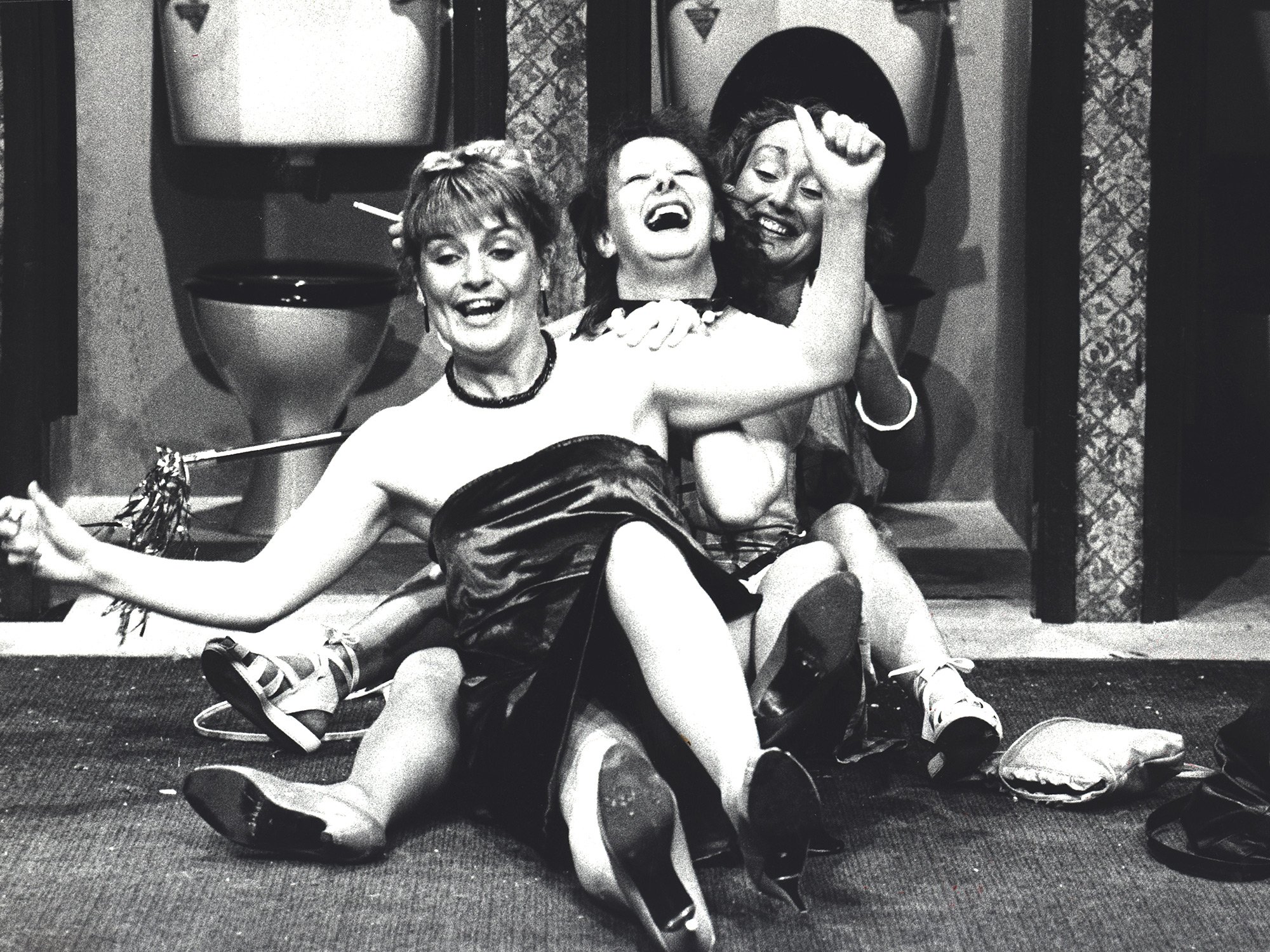
It's a tougher piece of work. It's still set in the dancehall's
toilets, where the groom spends the entire play with his head
stuck down a toilet.
- The basic theme of staying
or leaving remains and is just as relevant. "Ringo Starr
has just been given a kicking because he left Liverpool!"
adds Russell, recalling the Beatle's return to his home city
for the opening of its year as European capital of culture. "Of
course he left Liverpool - he was in the Beatles!" The next
sentence is preceded by a small sigh of exasperation. "The
thing that I'm endlessly praised for, and it's nothing to do
with my work, is that I always stayed in Liverpool."
- In the play, the bride Linda
meets Peter, an ex who has gone to London and found a bit of
Top of the Pops glory as a singer. "The debate between Peter
and Linda in the remix is stronger than in the original and much
more spelled out. While it wasn't consciously at the front of
my brain, I must have had the idea in my head because we were
just about to embark on this capital of culture thing. I knew
this debate was in the air and it must have infused what has
been written.
-
- "This thing does not
change in Liverpool. Just two weeks ago, [Liverpool lawyer and
arts patron] Rex Makin gave Phil Redmond a good kicking because
Redmond has moved out to Tarporley [a Cheshire village]. He's
not got Liverpool credentials any more!"
-
- That's exactly what Linda,
a close relative of Russell's Shirley Valentine and Rita, says
to Peter: "I can say just what the fuck I like about living
here because I do live here ... So when you come back here an'
you hear one of us slaggin' off the place, don't think it gives
you the right to join in. You left! Remember?"
-
- Russell lives here too but
scorns any idea that Liverpool is some kind of essential inspiration.
"I just take it completely for granted. I don't think of
it in those terms. I wince when people say 'his beloved Liverpool'.
That kind of sentimentality deeply, deeply embarrasses me."
-
- So why didn't he leave, seek
fame and fortune in London like Peter? It was, he says, a self-protective
thing. By the time of his first success with John, Paul, George
Ringo...and Bert, he had already knocked about in the folk world
and seen people "screw up badly, do the whole drugs thing,
go down the booze path.
-
- "I love living and love
a jar. I know that's in me. I was aware of Brendan Behan and
becoming the joke of London. I was aware of Robert Burns going
to Edinburgh and being feted in the ploughman poet way. I always
fought passionately to avoid that kind of thing."
-
- Stags and Hens opens just
as Russell's musical Blood Brothers ends a three-week run at
the Empire up the road. Russell has other projects on the go
in the capital of culture year but none of them are happening
under the banner of the Liverpool Capital of Culture Company.
"I'm doing what I have always done. And if the perception
out there is that it is part of capital of culture, that's something
I'm not going to do anything to dispel. I cannot not be part
of Liverpool culture with that work going on."
-
- There is an obvious soreness
that neither the Playhouse nor the Everyman, theatres with which
he has been so closely associated, has commissioned a new play
from him for 2008. But he holds back. "Despite my misgivings
and serious criticism of lots of the shenanigans, I hope by the
end of the year I can look back and say some marvellous things
have happened and that Liverpool comes away from it with an enhanced
reputation. We all hope that."
-
- Meanwhile, he is keeping watch
on the Royal Court's plans to build a permanent company from
the wealth of acting talent based in Liverpool. There are also
hopes for a television version of his novel The Wrong Boy, a
film of Blood Brothers, a full musical version of Our Day Out.
But as yet no new play: the last was Shirley Valentine, first
produced 22 years ago.
-
- "But I tend to find what
I need to do. I love not working. I love being in Portugal and
getting the paints out, walking, getting the binoculars out and
looking at a bird." And he is now enjoying a senior citizen's
benefits. "I got the bus pass last August. I ran down, jumped
on a bus and was waiting for everyone to shout, 'Throw him off
- he's not 60'. And nobody did."
|